

Riding the Hurricane
Dams, banned books, and a bike ride

We head back to the Olympic Peninsula for another bike ride, this time an organized ride called Ride the Hurricane, a sea-to-summit ride of twenty miles and five thousand feet from Port Angeles, WA, up to Hurricane Ridge in Olympic National Park, with the road closed to cars for the morning. Unplanned joys include a former dam and a banned book display.
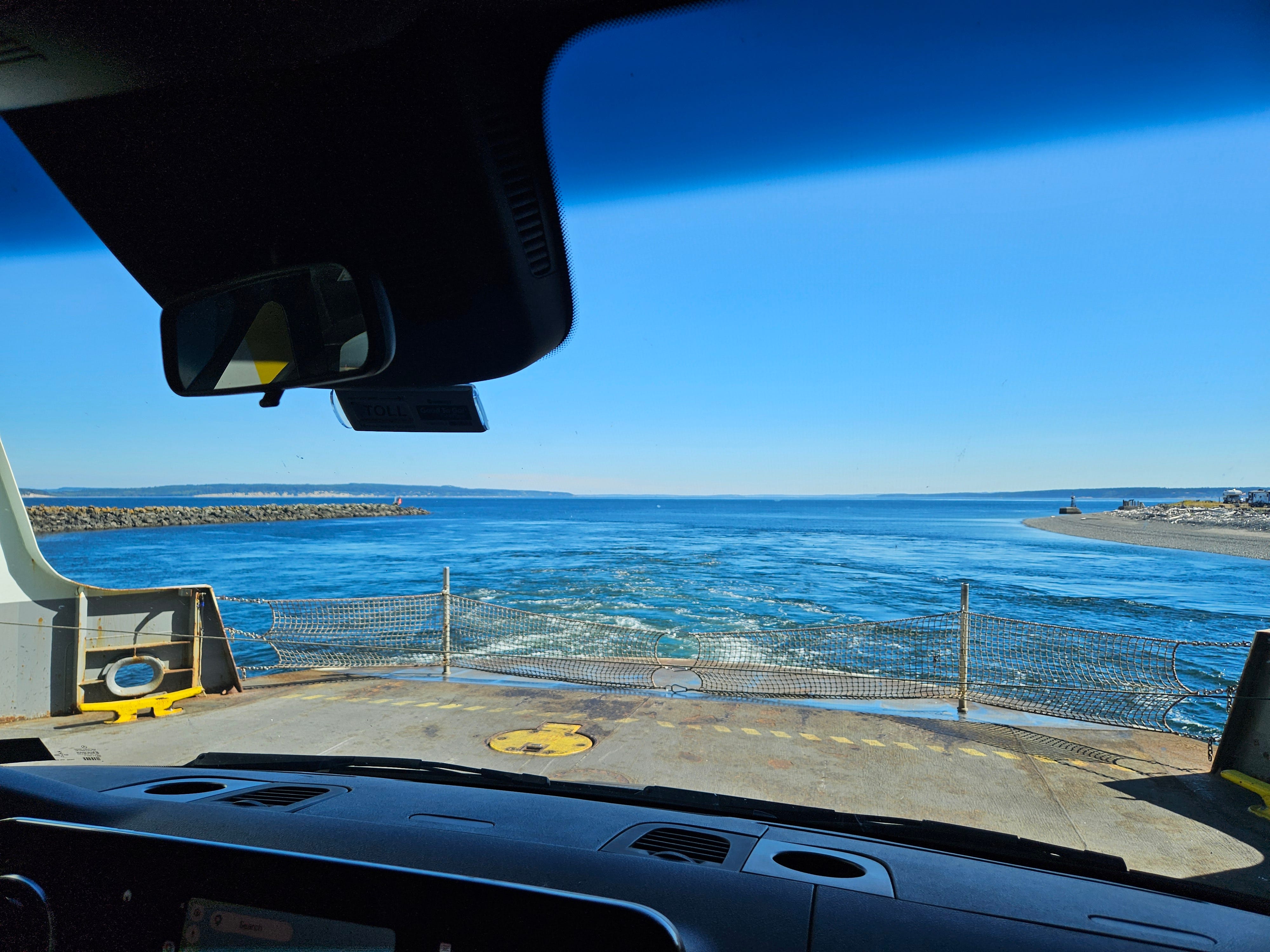
Friday, we board a late afternoon ferry from Coupeville to Port Townsend on a beautiful sunny day, auspiciously the first to board.
We’re camping a few miles from Port Angeles, with friends at the same site. It’s quiet and peaceful, just what we need. The campsite is next to the trailhead for the Elwha dam removal site, which I’m excited to visit.
Dams
Saturday, we awake to light rain, as forecast. We slept late and well, better than at home. We have a much-needed quiet morning, giving me a chance to catch up on reading and writing.
By midday, the rain has cleared up and we start our short hike up to the Elwha Dam site.
The Elwha runs fast and steep, from its headwaters in Washington’s Olympic National Park to the Strait of Juan de Fuca. At the time that [Thomas] Aldwell stood on the banks, salmon swam its length, including 100-pound monster chinook. In the push of current, he saw not just beauty and fish, but power — power to light a town, to attract industry, to put Port Angeles on the map. He bought the land, and in 1913, the Olympic Power Development Company, Aldwell’s brainchild, completed the Elwha Dam.
Rebuilding a river as Washington’s Elwha dams come down - High Country News
By 2011, the Elwha and the Glines Canyon Dam, further upstream, were supplying just forty percent of the electricity for just one paper mill and were clearly redundant. Removal began on September 17, 2011, barely two weeks after I moved to Washington, and was a key part of letting me know it was the right decision. Removal restored flow to the full length of the river, allowing salmon to return and the riparian ecosystem to recover. And it’s not just the river. At the mouth in the Strait of Juan de Fuca, the delta has grown back and even the kelp forests have rebounded.
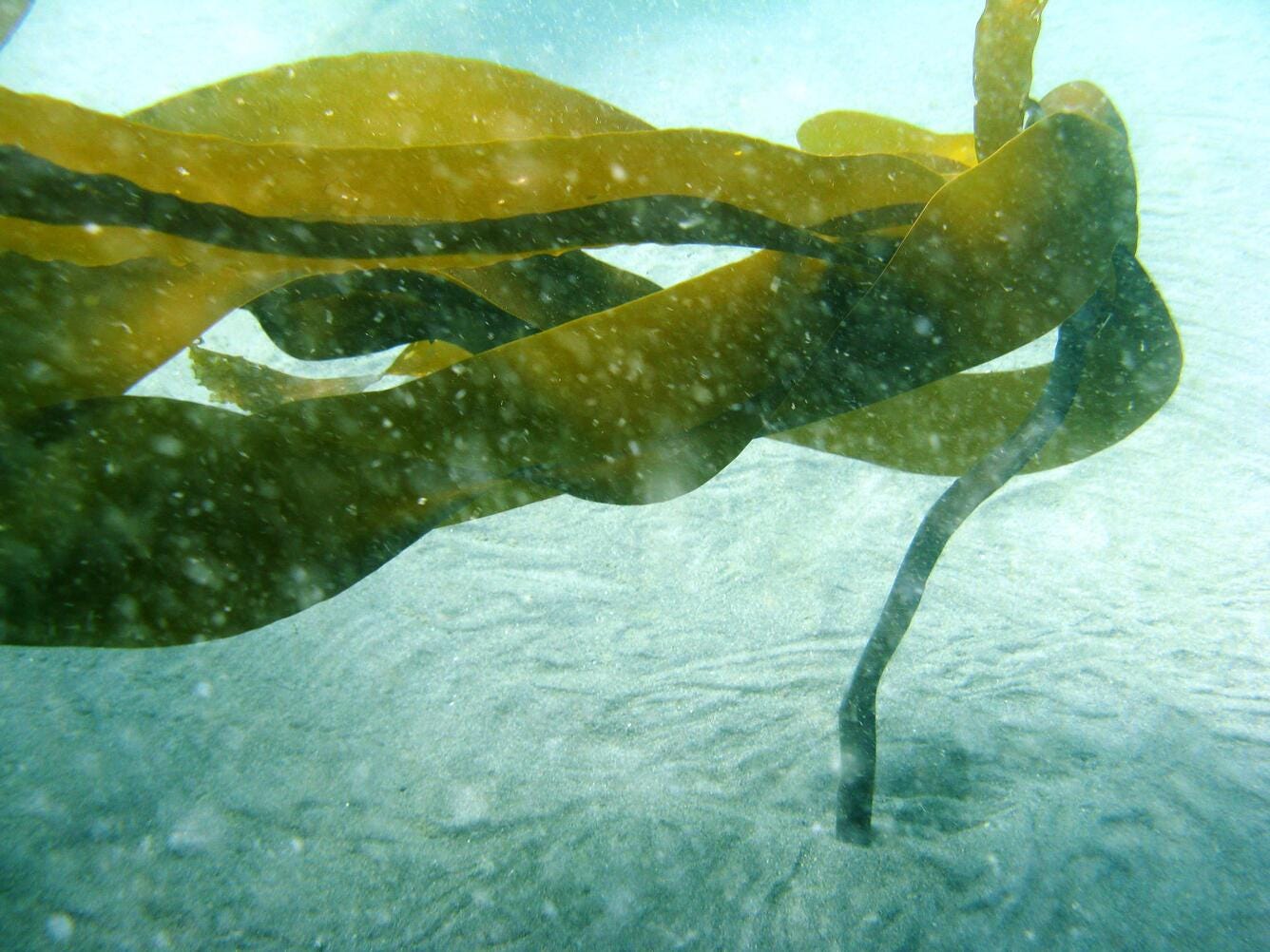
“The key takeaway is if you remove a dam, you can change the marine ecosystem,” [Ian] Miller said.
When dams come down, what happens to the ocean? - High Country News
I was last at the river in 2017, when our hiking group visited the Glines Canyon dam site.
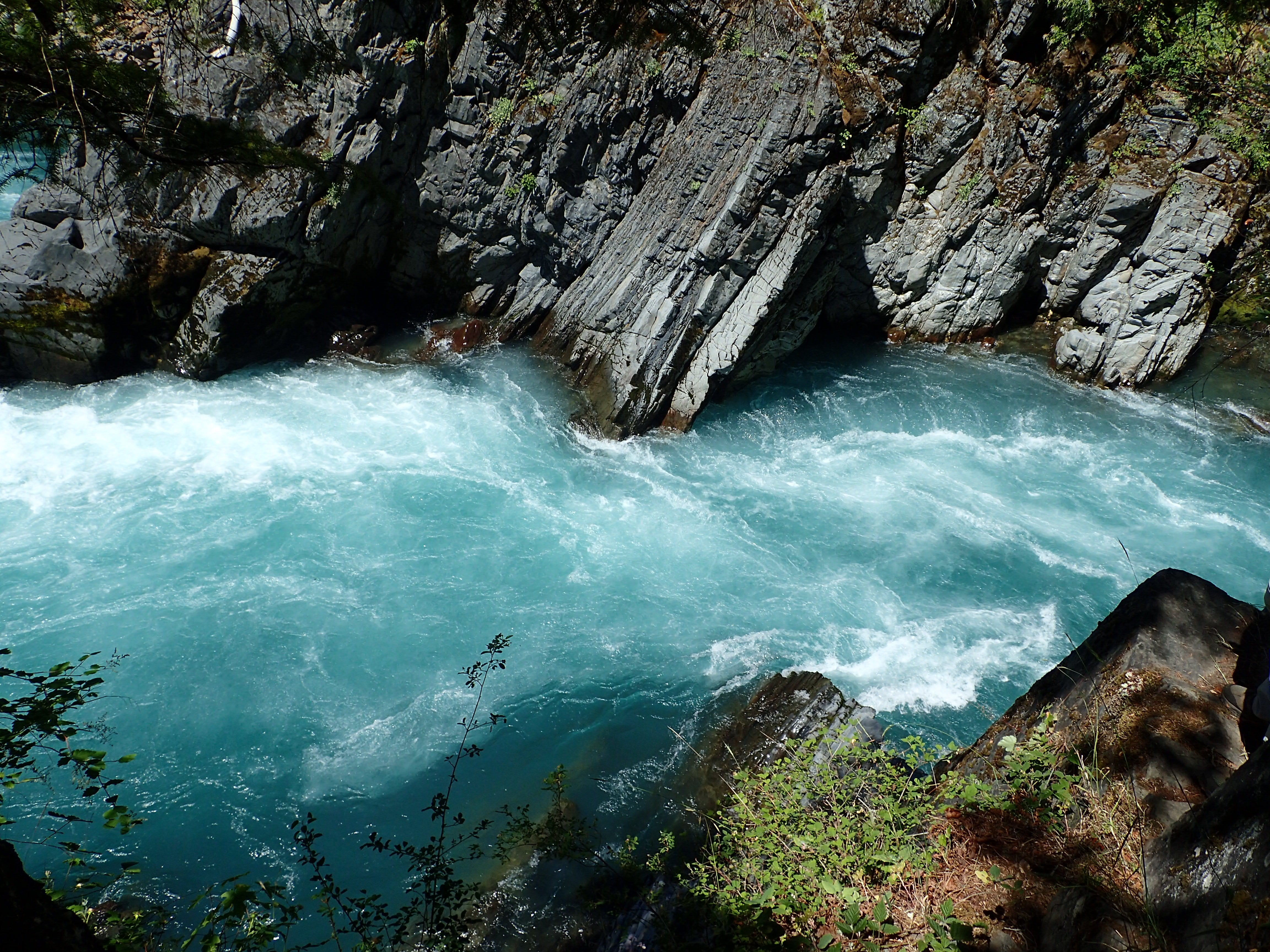
It’s great to add the Elwha dam removal site this time.
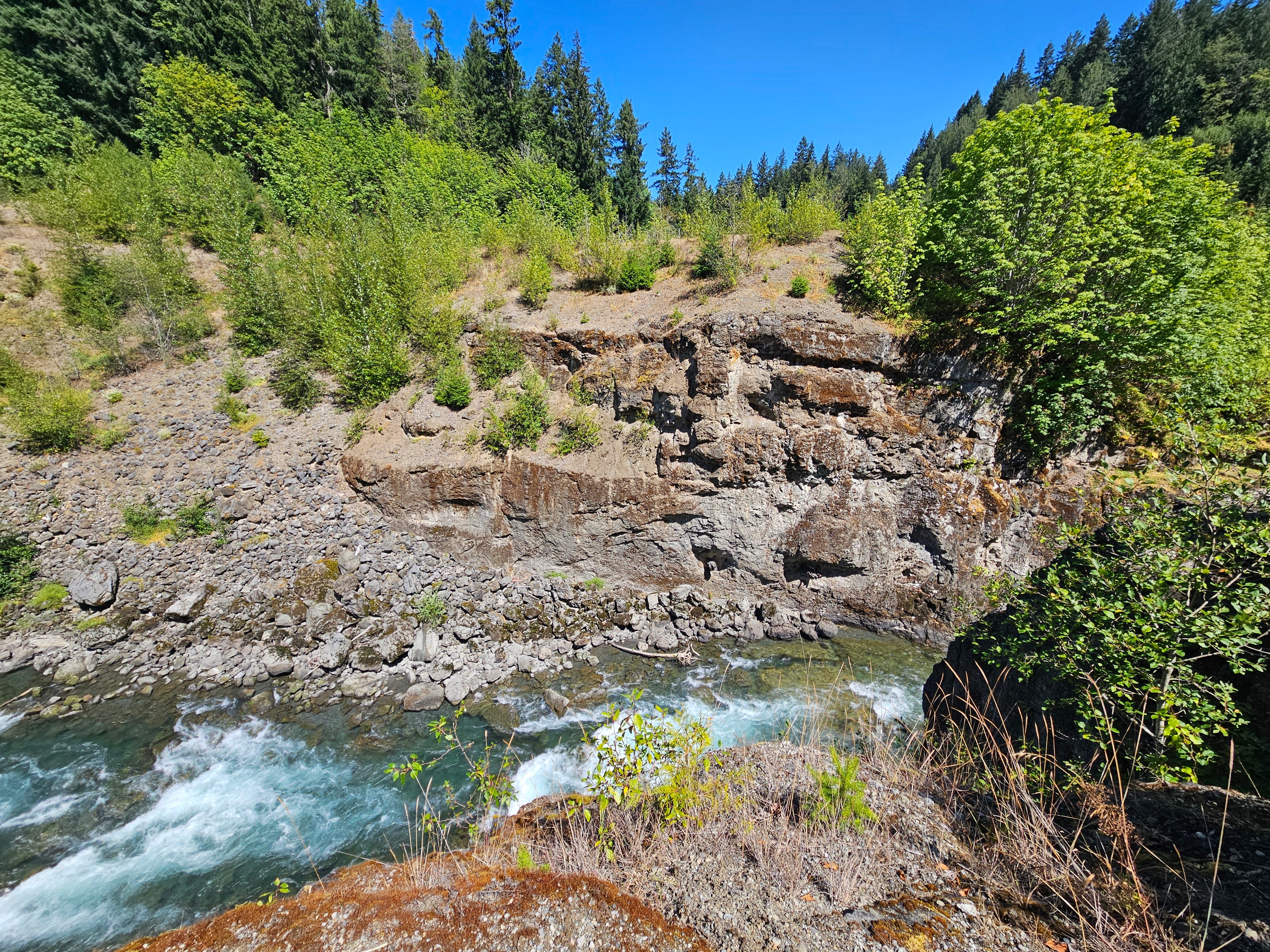
A little further upstream, we’re able to clamber down, with the aid of a knotted rope, and stand at the edge of a river at what used to be the bottom of Lake Aldwell that was trapped behind the dam and is now running free.
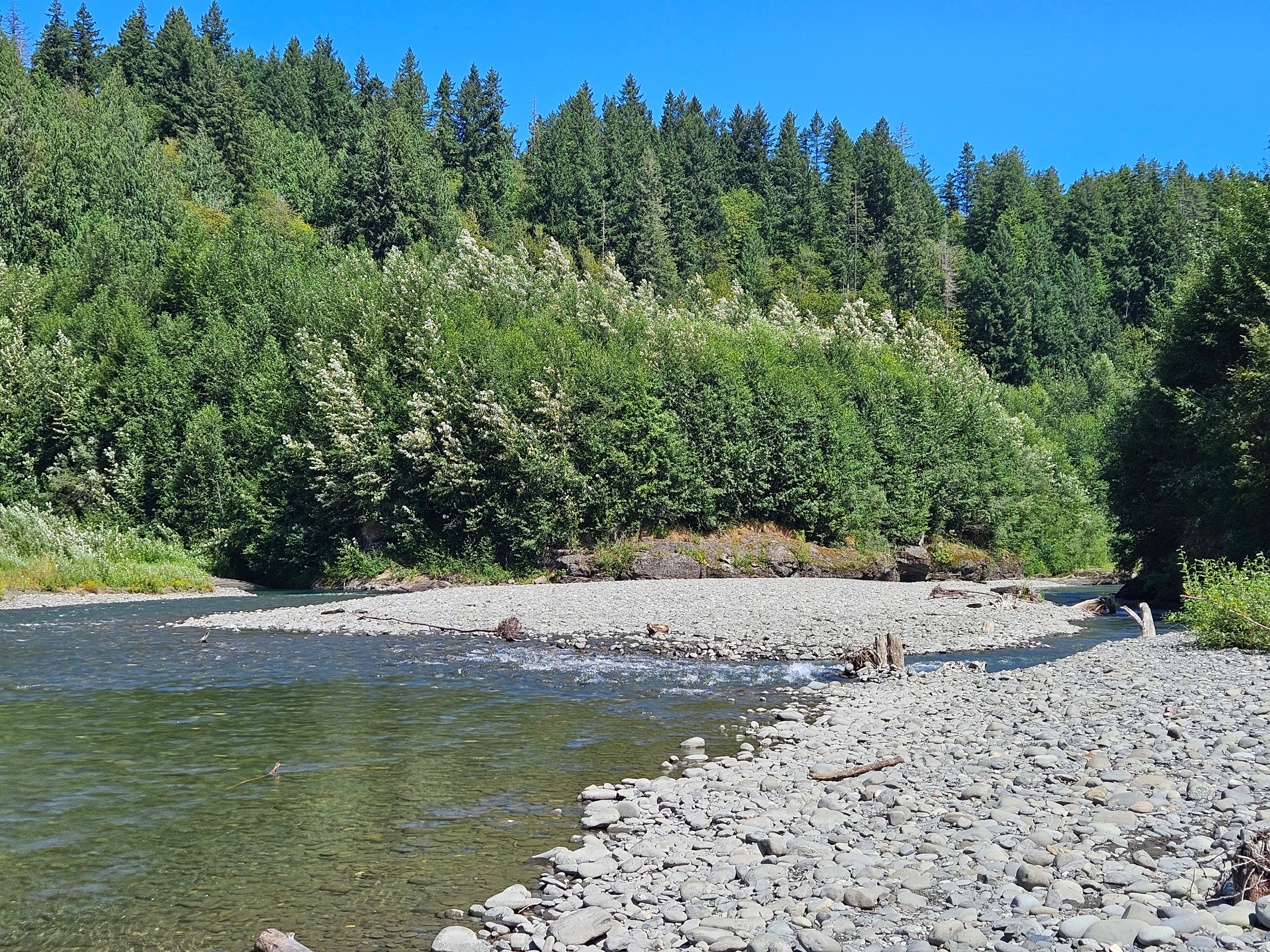
It was just us, the river, and a circling bald eagle.
Banned Books
In the afternoon we take a stroll through Port Angeles, a former logging town with a long Native American history that’s reinventing itself as a tourist destination and gateway to the Olympic National Park, and find a bookstore.
My attention is drawn to a display of banned books by a Black couple explaining banned books to their teen children, the father pointing to To Kill a Mockingbird, “that was required reading in school,” I Know Now Why the Caged Bird Sings, “and that one,” and The Color Purple,“and that too.”
“Anne Frank?” we exclaimed in unison as our eyes traveled down the display.
For me, required reading in school was Lord of the Flies, which I found rather ironic, as it described the social structure of my school perfectly. The teachers didn’t realize some would read it as a How to book. Or maybe they did.
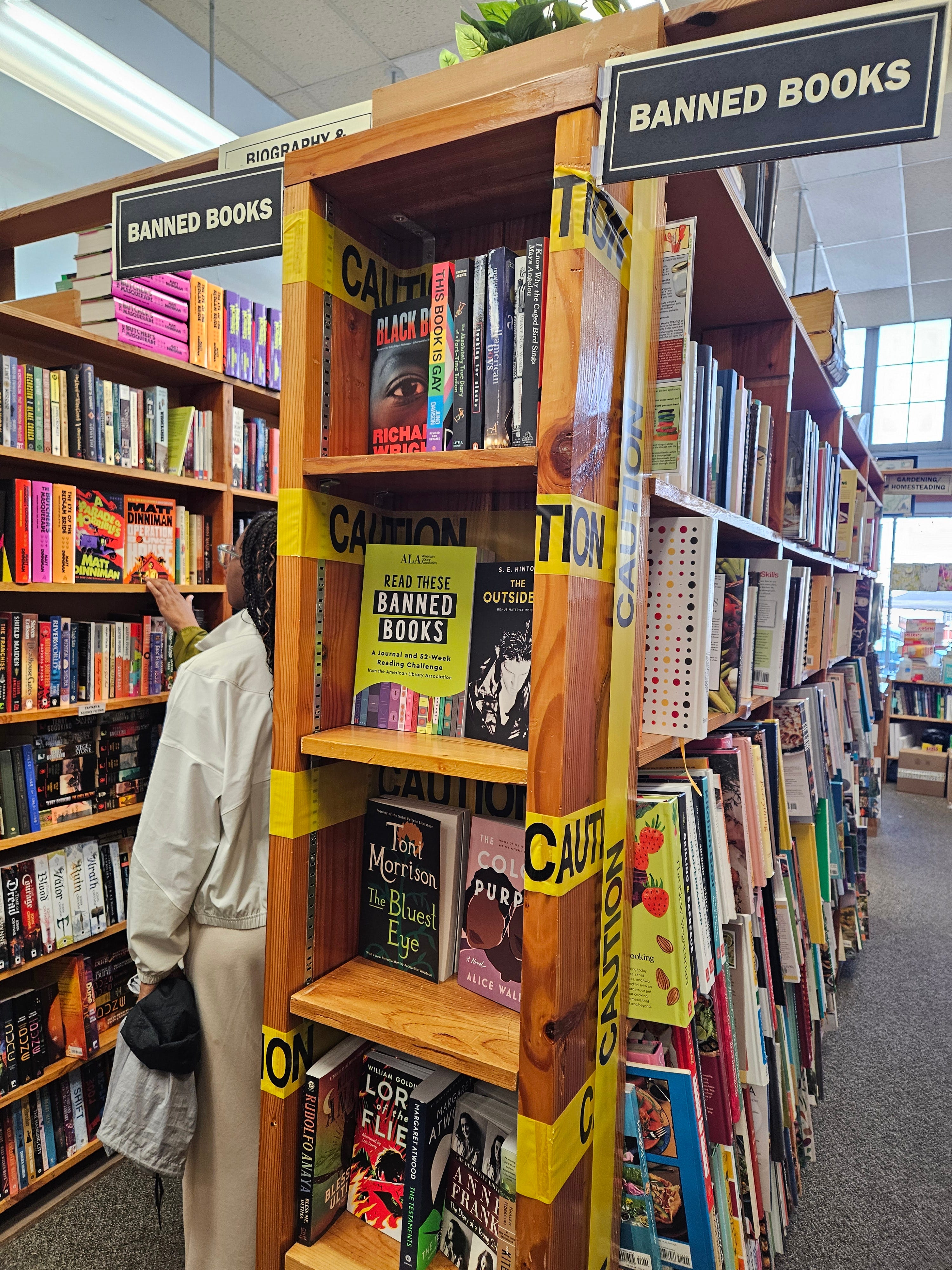
Anyway, well played, Port Book and News, Port Angeles. The caution tape is a great touch.
A Bike Ride
Sunday morning is cool, but dry, with temperatures touching sixty in Port Angeles and high forties expected at the summit of Hurricane Hill, almost a mile high. No rain is forecast, so we decide against rain gear and long finger gloves.
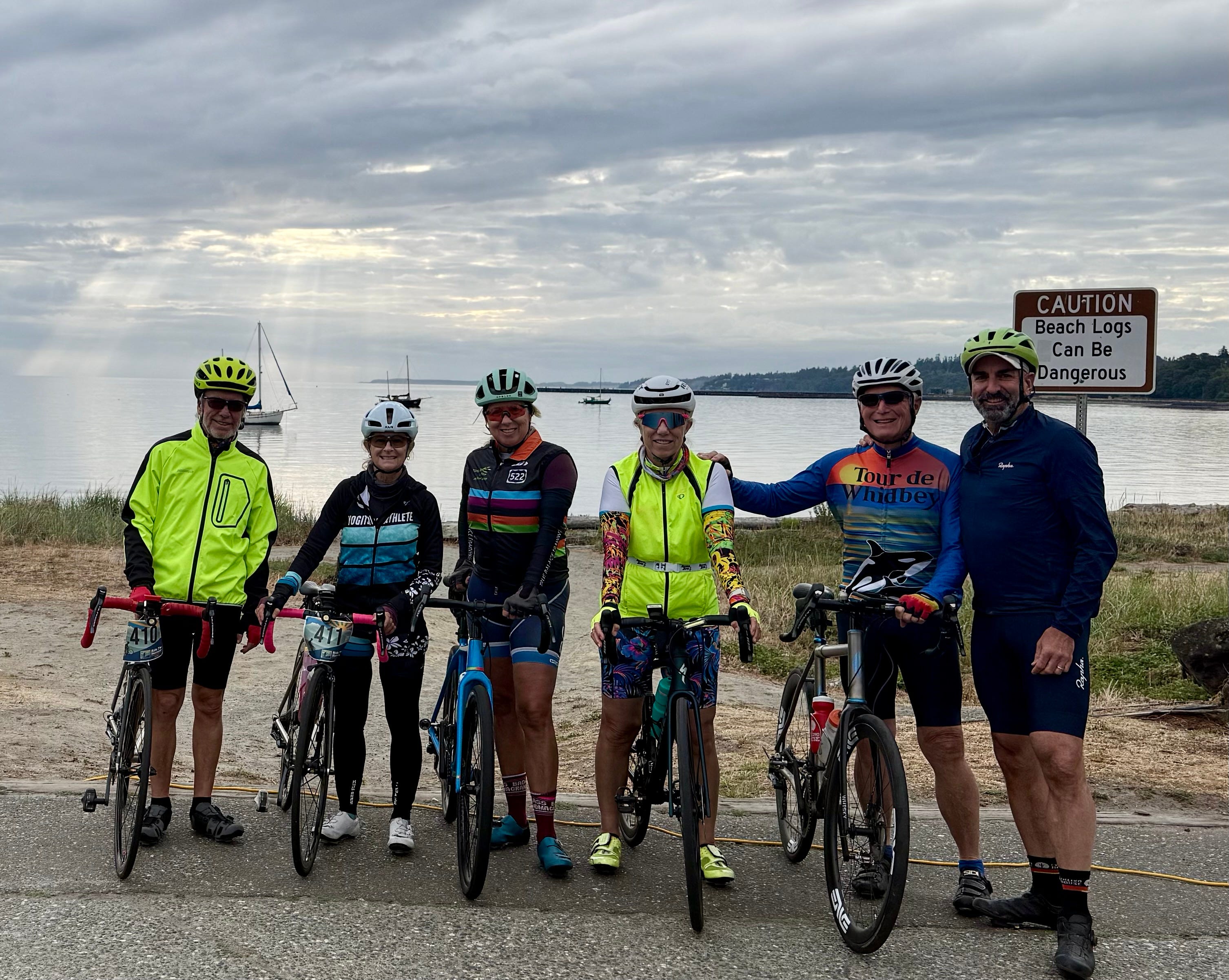
I’m nervous as we gather at the start and for the first part of the ride until I settle into a rhythm. The first part from Port Angeles waterfront up to the park entrance is actually the steepest, and even then, the hills are no steeper than we’re used to at home. About a third of the way up, it starts raining. Not in the forecast! It stops after a while, but not before I’m good and wet. I make it to the halfway point feeling pretty good. Next come three short tunnels. I emerge from the third into cloud, with visibility down to a couple of hundred feet. I start to get cold, and I’m really starting to question the wisdom of my clothing choices. And life choices, for that matter. Above all, I realize that if I’m cold going up, I’m going to be even colder going down, and that that could be dangerous. I decide to turn around at three thousand feet.
I’ve been on the road for two hours, covering just over twelve miles. It takes me almost another hour to get down. I’m shivering so much the bike is shaking, my hands are cold and cramping from holding the brakes, and it rains again, the spray from the front wheel filling my shoes with water. Thirty-somethings in shorts and cotton t-shirts with antifreeze for blood go flying by me at thirty-something miles an hour.
Part way down, Brenda texts me from the summit, although I don’t see it until I finish: “Turn around when you’ve had enough. It’s cold and wet. You won’t like it.” No kidding.
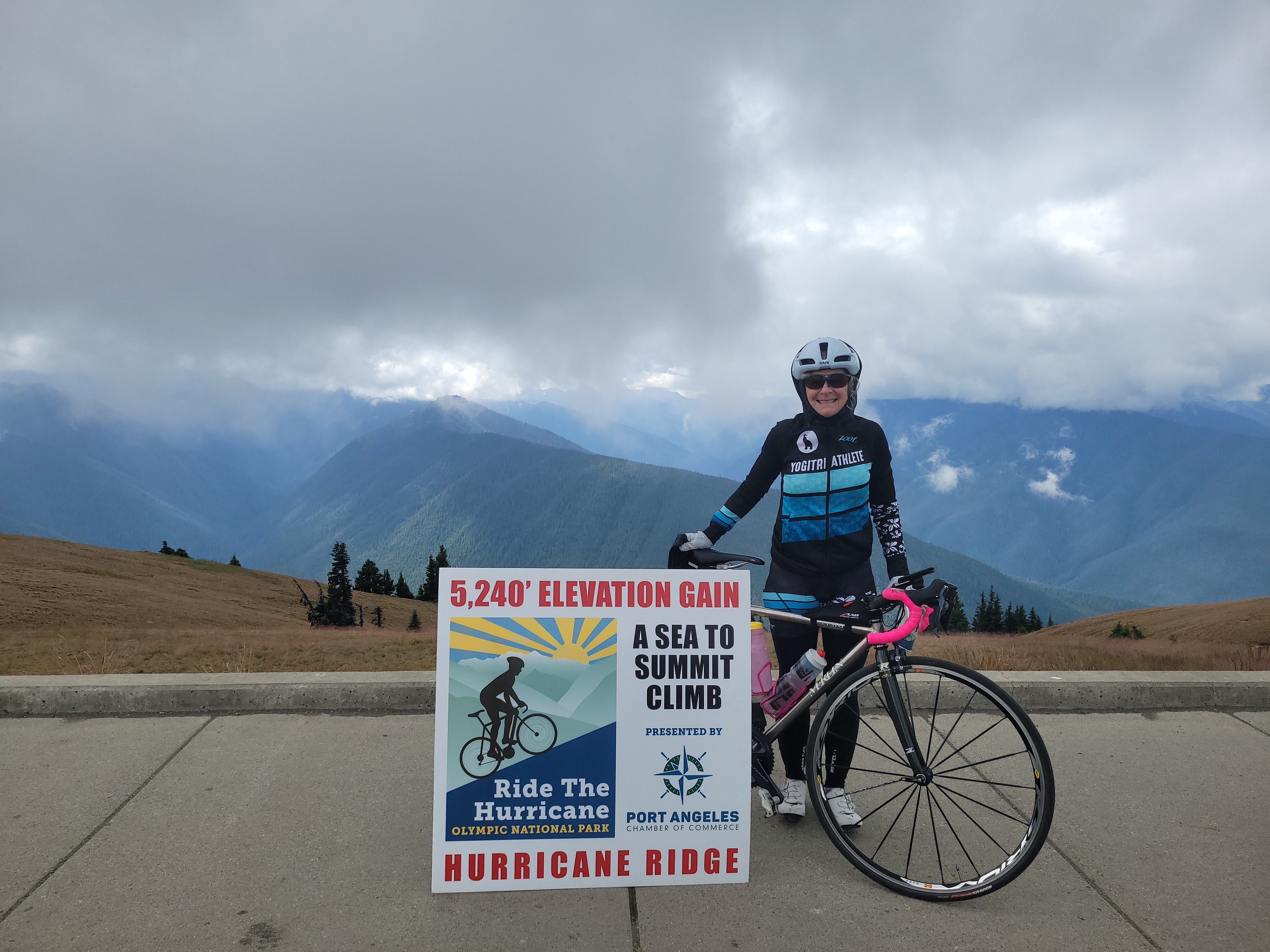
After the finish, I put the bike away, put on warm clothes and wait for Brenda, first of our group down the hill, after she stopped at a rest stop to beg a pair of food service gloves and a piece of cardboard for under her jacket. Some riders hang out in a rest stop ambulance to recover. Others grab trash bags. There are reports of a clown car shuttling riders down.
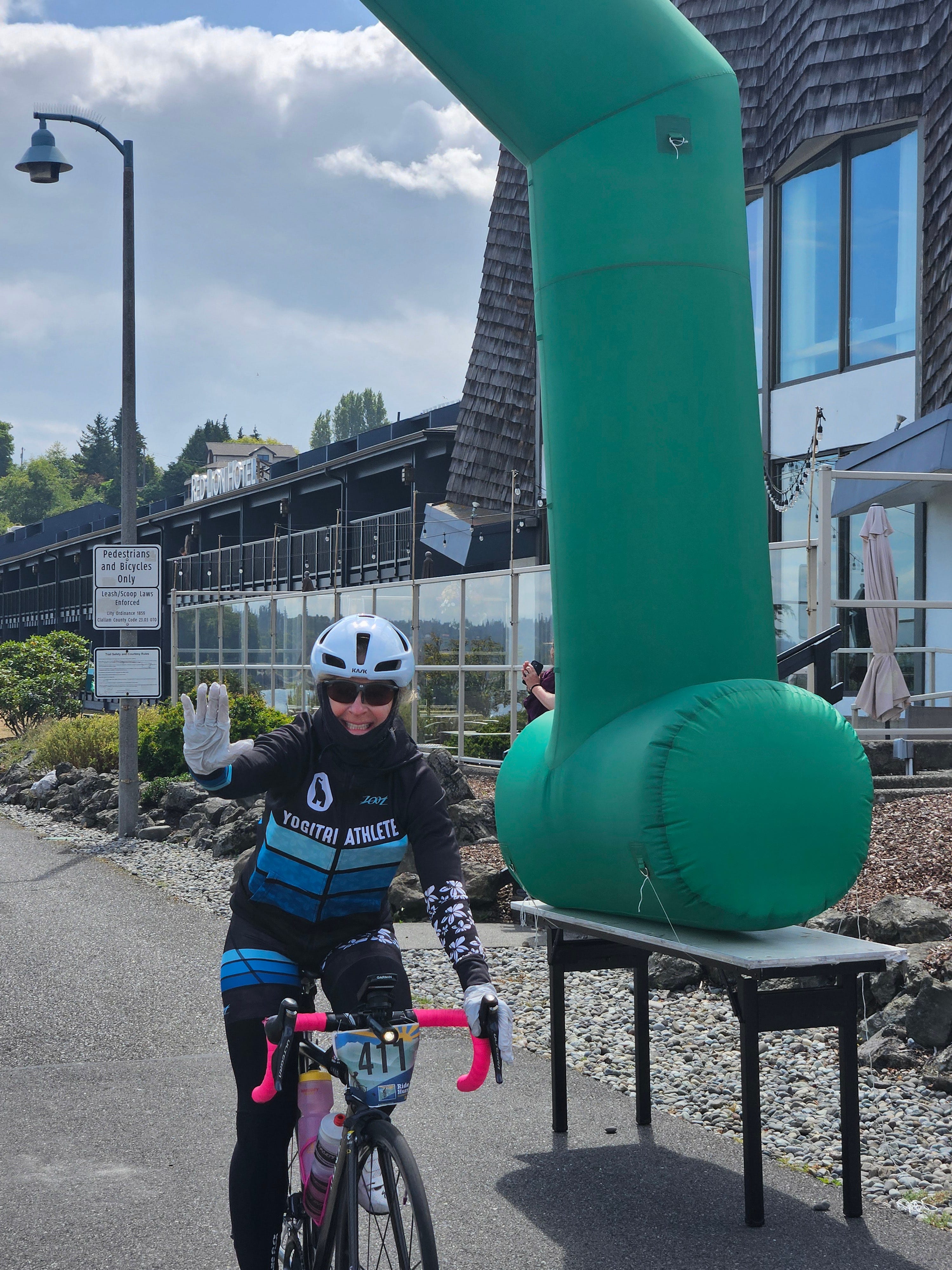
I feel bad that I didn’t do the whole thing, but then I remind myself that two years ago my tendinitis was so bad I could barely walk. I’ve come a long way. The group meets at the after party for the usual discussion after type 2 fun, which is not fun at the time, but fun in retrospect.
“That was awful.”
“That sucked.”
“That was nasty.”
“Let’s do it again next year.”
“OK!”
Including me, but with rain gear this time. I know better than to forget that in the mountains we can get all four seasons in the same day, even in August, regardless of the forecast.
Thank you for reading. As the Substack algorithm needs poking harder these days, please like, comment, share, restack, subscribe or all of the above!
Seriously these seasons all in one day.☀️⛈️🌦🌡❄️ I am glad you got to see the free river.
Fun article in my home territory, John. My father drove us up to Hurricane Ridge when we were toddlers to teach us to cross-country ski. I would add about the Elwha that the Lower Elwha Clallam people struggled for over a century to have those dams removed. Not only were many fish species decimated by the installation of the dams, but so were sacred sites. The removal created an example for dam removals worldwide. Also, Anne Schaffer's Coastal Watershed Institute focuses on repairing the nearshore environment liberated by the dam removal. I recommend getting on the mailing list for Anne's newsletter, which also has wonderful photos of the work they do, including interns going into habitat restoration. Your damp bike ride makes me shiver in sympathy! Good for you for trying.